By abdirezak Sahane Elmi
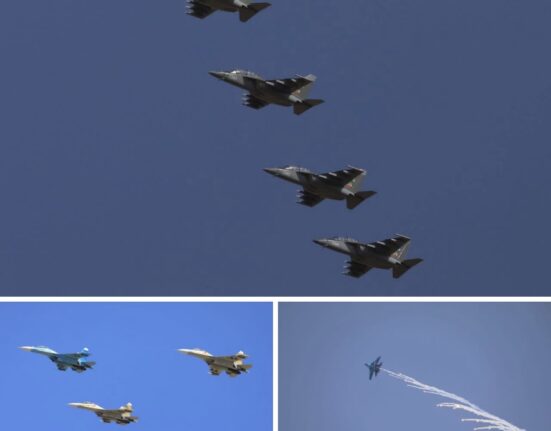
Any attempt to escalate war against Ethiopia, by state actors, proxy forces, or political adventurists must be confronted with absolute clarity and moral firmness. Ethiopia is not a battlefield for recycled ambitions, unresolved grudges, or leaders who survive on chaos. It is a sovereign nation of more than one hundred thirty million people, bound by history, diversity, sacrifice, and an irreversible demand for peace, dignity, and inclusion. Those who continue to test Ethiopia’s red lines are not merely miscalculating military realities; they are waging war against the will of an entire people.
A History of Hostility and the Tragedy of Missed Peace.
The relationship between Eritrea and Ethiopia has been shaped by prolonged hostility since Eritrea’s independence. What could have evolved into a model of post-secession cooperation instead hardened into cycles of mistrust, militarization, and zero-sum thinking. The border war of 1998–2000 entrenched this hostility, but what sustained it afterward was not merely unresolved territorial issues it was a political culture that treated conflict as identity and war as governance.
At the center of this destructive continuity stands Isaias Afewerki. For decades, Eritrea has known neither constitutional order nor internal peace. A whole generation has grown up without elections, without accountable institutions, and without freedom. Instead of nation-building, the Eritrean regime has normalized perpetual mobilization, forced conscription, and the export of instability. Conflict after conflict, theater after theater, Isaias Afewerki has sown crises not as accidents, but as instruments of survival.
A Leader Without Peace, a Region Without Rest.
Isaias Afewerki is an aging ruler who has yet to recognize a basic truth of humanity: leaders pass, people die, and only legacy endures. Yet his legacy is not one of construction, reconciliation, or prosperity it is a legacy of division, destruction, and bloodshed. Trained to fight, conditioned to distrust peace, and driven by the illusion that chaos secures relevance, he has consistently chosen war over coexistence. Where others seek institutions, he seeks enemies. Where nations pursue development, he pursues disruption.
This is not merely a personal failure; it is a regional tragedy. A man created to live in war cannot build peace. A political culture forged in secrecy and fear cannot coexist with transparency and pluralism. And a leadership that thrives on conflict cannot accept a neighboring Ethiopia that seeks reform, inclusion, and stability.
The Tigray War and Eritrea’s Uninvited Intervention.
The Tigray war of 2020–2022 exposed this reality with devastating clarity. Without invitation, Eritrean troops crossed into Ethiopian territory and became deeply involved in a campaign that inflicted immense suffering on civilians. What unfolded was not a defensive necessity but an ugly revenge, carried out against the people of Tigray under the cover of a broader conflict.
Prime Minister Dr. Abiy Ahmed has since publicly clarified this truth before Ethiopia’s parliament. He acknowledged that Eritrea’s involvement was not a genuine endorsement of Ethiopia’s federal agenda, and that significant efforts were made to prevent the scale and nature of Eritrea’s intervention. However, events spiraled out of control driven by compounding mistakes and destructive decisions.
Two critical errors accelerated the descent into war.
First, the TPLF’s refusal to remain within the Prosperity Party framework, choosing instead a path of hostility and exclusionary politics, including its rejection of a federal order administered by Oromo leadership, which was new to Ethiopian history.
Second, the catastrophic decision by the TPLF to attack the Northern Command of the Ethiopian National Defense Force an act that shattered any remaining political containment and militarized the crisis overnight.
A Costly Alliance and a Strategic Miscalculation.
If there was a mistake on the part of the federal government, it was the decision to ally with the Eritrean regime. This alliance was not strategically calculated with sufficient depth. The intention of Dr. Abiy Ahmed to break from Ethiopia’s old mindset of endless war and inherited hostility was understandable and, in many ways, commendable. But intention alone is not strategy.
There was a failure to fully assess the political DNA of Isaias Afewerki: a man shaped to destroy rather than build, to divide rather than reconcile, to survive through war rather than peace. Trusting such a regime as a partner in a fragile transition was a misreading of history and character. Peace cannot be subcontracted to those who have never lived by it.
Pretoria, Peace, and the Exposure of Old Conspiracies.
The signing of the Pretoria Peace Agreement marked a turning point. It revealed, unmistakably, who was genuinely committed to peace and who merely tolerated it when convenient. In choosing to prioritize the Tigray people and the peace of Ethiopia over old alliances, Prime Minister Abiy Ahmed made one of the most consequential decisions of his leadership. It was a moment of responsibility and moral clarity.
The federal government began implementing the peace agreement with seriousness and intent. But peace threatened those whose political culture depends on conspiracy and chaos. Elements within the TPLF and the Eritrean regime, bound not by ideology but by shared habits of intrigue resumed covert communication, seeking to undermine stabilization efforts and re-engineer conflict.
The continuation of armed pathways by Fano followed a similar logic: grievance without political resolution, militarization without national mandate, and defiance without popular consent.
Testing Ethiopia’s Red Lines: A Dangerous Illusion.
Today, the renewed military posturing in northern Ethiopia the mobilization of Eritrean forces and Eritrea-backed rebel groups signals a reckless attempt to test Ethiopia’s red lines once again. This is an illusionary strategy. It assumes that Ethiopia is fragile, divided, or indifferent to its sovereignty. It is none of these.
To those thinking inside the narrow box of war, hard questions must be asked:
1. Do you truly believe the Ethiopian people desire you or another war?
2. Do you understand that Ethiopia is not only the north?
3. Do you recognize that nearly one hundred million Ethiopians are now consciously questioning the old history of domination, determined that it will never be repeated?
4. Are you aware that your opposition to the current government is widely understood as an attempt to reclaim past political dominance?
5. Do you realize that Ethiopia’s 86 nations and nationalities will no longer accept exclusion from political, economic, and national power?
If you understand these realities, if you are capable of answering them honestly then you must also accept this truth: no agenda can succeed without the people’s consent. Power without legitimacy is temporary. War without public will is defeat delayed.
Those who continue down this path must abandon selfishness, stop serving as proxy instruments for foreign interests, and confront reality. Ethiopia belongs to all its peoples. It will continue as a country governed by inclusion, justice, and shared ownership. Anyone who wages war against these principles will lose politically, morally, and historically.
A Call to the Federal Government.
To the Federal Government of Ethiopia: be firm and resolute. Consult the people. Decide with the people. Defend the country with the people. Protect the sovereignty and national interests entrusted to you as an elected government. Invest in peace that is sustained, development that is continuous, and a political order grounded in dialogue, accountability, and unity in diversity.
Ethiopia does not need another war to define itself. It needs courage to protect peace and wisdom to defeat those who profit from chaos.
By. abdirezak Sahane Elmi
Former government official, writer and geopolitical analyst.
He can be reached abdirezaksahane15@gmail.com