Abdirezak Sahane Elmi
Somalia has long remained trapped in a cycle of political uncertainty, fragile security, weak governance, and unresolved state-building challenges. Decades of conflict, institutional collapse, endemic corruption, and elite power struggles have severely undermined public trust in the state. Despite these setbacks, the Somali people, supported by sustained engagement from the international community have continued to pursue the difficult but necessary path toward rebuilding national institutions, restoring constitutional order, and consolidating federalism.
The international community, including the United Nations, African Union, IGAD, the European Union, the United States,Ethiopia , Kenya, Turkiye, Gulf partners, and other friends of Somalia, has invested immense political, financial, and security resources to support Somalia’s state-building process. These efforts have aimed at strengthening governance, advancing constitutional review, supporting elections, reforming the security sector, and stabilizing liberated areas. Dialogue, inclusivity, and consensus have always been presented as the only viable tools for preventing relapse into chaos.
Yet today, Somalia stands once again at a dangerous crossroads.
President Hassan Sheikh Mohamud’s Manufactured Crisis:
The country is now facing a deepening political crisis driven by uncertainty, unilateralism, and an increasingly illusionary pursuit of power extension by President Hassan Sheikh Mohamud. Rather than acting as a unifying national leader at a critical moment, the President appears determined to steer the country toward confrontation, institutional breakdown, and lawlessness.
This reckless political behavior risks undoing years of fragile progress and may push Somalia back into a destructive spiral that the nation can ill afford.
The Somalia Future Council and the Promise of Dialogue:
In response to the growing political deadlock and fears of state collapse, a serious and credible initiative emerged: the Somalia Future Council. This council brought together key national stakeholders, including the Puntland and Jubaland regional governments, former Presidents, former Prime Ministers, former federal ministers, senior political figures, and members of both houses of parliament.
The Council’s first meeting, held in Kismayo, Jubaland, represented a genuine effort to rescue Somalia’s state-building project and return it to a credible and inclusive path. The Council formally called for an urgent national political dialogue with the Federal Government.
Initially, the response from the Federal Government, led by President Hassan Sheikh Mohamud, appeared positive. A dialogue was scheduled for February 1 in Mogadishu. Subsequently, the Somalia Future Council met in Nairobi, accepted the proposed date, and submitted clear, timely, and nationally relevant agenda items. Both sides nominated technical committees, and preparations for the dialogue began in earnest.
At that moment, Somalia stood at the threshold of a critical opportunity for national reconciliation.
The Deliberate Sabotage of Dialogue:
However, that opportunity was recklessly and deliberately destroyed.
Today, President Hassan Sheikh Mohamud exposed his true intentions: ensuring that the scheduled dialogue would not take place.
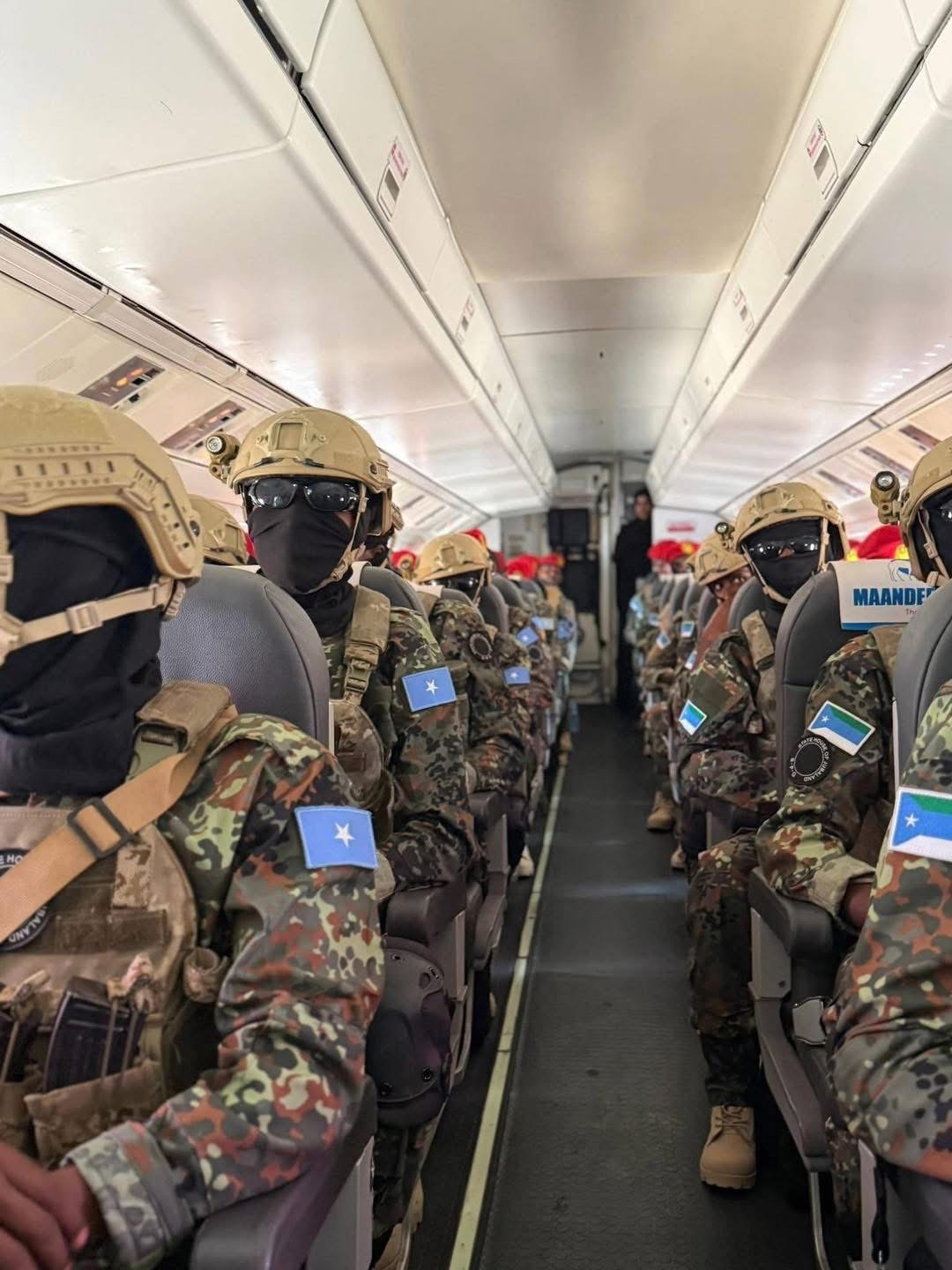
In line with standard and well-established Somali political practice, the Puntland and Jubaland administrations moved to send their technical teams and security protocol staff to Mogadishu in advance, in order to prepare necessary security and logistical arrangements. This is neither unusual nor controversial in Somalia’s political environment it is a basic security requirement.
Instead of facilitating this process, President Hassan Sheikh Mohamud issued an extraordinary and dangerous order: aircraft carrying these staff were denied permission to land at Aden Adde International Airport, without even verifying whether the planes had sufficient fuel to return safely to their points of departure.
This decision was not only irresponsible, it was reckless, dangerous, and potentially criminal.
The same order affected flights carrying the security and protocol staff of both Jubaland and Puntland Presidents, endangering the lives of all passengers aboard. Such an action is unbecoming of any head of state, let alone one presiding over a fragile and conflict-affected nation.
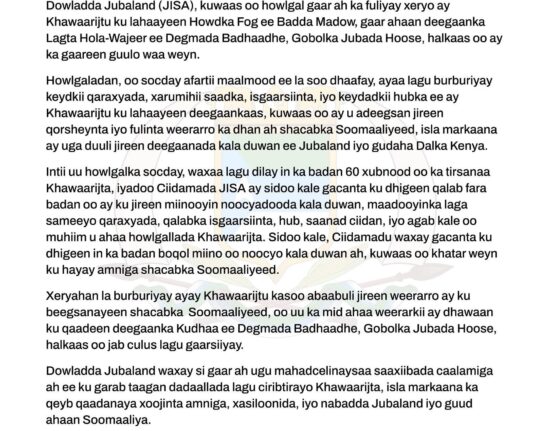
Public statements from Puntland President Said Abdullahi Deni and the official communique from the Jubaland Government made it clear that this act constituted a deliberate obstruction of dialogue and a grave breach of political responsibility. At the same time, both administrations reaffirmed their commitment to Somalia’s national cause and to peaceful dialogue for the survival of the state-building process.
A Fear of Accountability and Political Reality:
The conclusion is unavoidable.
President Hassan Sheikh Mohamud’s actions were driven by fear, fear of dialogue, fear of accountability, and fear of political reality. He understands that he cannot survive an open, honest, and inclusive national discussion. With less than four months remaining in his constitutional mandate, he appears determined to manipulate the political process, tailor an electoral path to his own advantage, and impose unilateral changes to the 2012 Provisional Constitution, which was originally drafted through broad Somali participation and national consensus.
Such unilateralism is a direct threat to Somalia’s fragile federal system and risks igniting widespread political and security instability.
A Call to the International Community.
The international community, Somalia’s partners, and all concerned regional and global actors must take note: President Hassan Sheikh Mohamud will bear full responsibility for the consequences of these actions and for whatever instability may follow.
At the same time, praise is due to President Ahmed Mohamed Islam (Madobe) of Jubaland and President Said Abdullahi Deni of Puntland for their courage, restraint, and commitment to national dialogue. Their decision to travel to Mogadishu, despite clear risks demonstrates genuine leadership and a sincere dedication to the future of Somalia and its people.
Somalia does not need power obsession.
It does not need unilateralism.
It does not need fear-driven leadership.
It needs dialogue, responsibility, constitutionalism, and leaders who place the nation above personal ambition.
By. Abdirezak Sahane Elmi
Writer and Geopolitical Analyst.
He can be reached: abdirezaksahane15@gmail.com