By. Abdirezak Sahane Elmi.
The recent victory achieved by the Jubaland Joint Security Forces against the Al-Shabab terrorist organization in Kuda town, a strategic coastal settlement under Badhaadhe District in Lower Juba, stands as one of the most decisive and painful defeats ever inflicted on the extremist group in southern Somalia. This operation was not only a military success but also a strategic and psychological turning point in the ongoing fight against terrorism in the Horn of Africa.
Kuda town occupies a highly strategic position, lying between Kismayo, the capital of Jubaland State, and Ras Kamboni, another key stronghold of Jubaland. Its location along the Indian Ocean coastline makes it critical for controlling supply routes, maritime access, and regional security, including the protection of the Kenya–Somalia border. For years, Al-Shabab has viewed this town as a gateway for destabilizing Jubaland and threatening regional peace.
The Battle That Shattered Al-Shabab’s Ambitions.
The battle began at approximately 4:00 PM when Al-Shabab militants launched a coordinated and aggressive assault aimed at overthrowing the local administration and reclaiming control of Kuda. This attack was not random, it was driven by revenge after three consecutive defeats previously suffered by the group at the hands of Jubaland forces. Determined to regain relevance and prestige, the terrorists poured fighters and equipment into the town, expecting a quick victory.
Instead, they walked into a nightmare of their own making.
The fighting continued for more than two days, marked by intense urban combat, tactical maneuvering, and relentless pressure from Jubaland’s security forces. Despite the brutality and length of the confrontation, the Jubaland forces held their ground, adapted to enemy tactics, and gradually dismantled Al-Shabab’s offensive.
Failed Tactics, Strategic Miscalculation, and Political Silence.
Al-Shabab entered the battle of Kuda convinced that tactics previously used in Aadan Yabaal and other towns in Lower Shabelle would once again deliver results. The group relied on surprise attacks, rapid infiltration, and psychological intimidation methods that had occasionally allowed it to exploit gaps in Somali National Army deployments elsewhere. Confident in these approaches, the militants sought to overwhelm Kuda’s defenses and swiftly seize control.
Instead, they encountered a well-prepared and highly disciplined force. Jubaland Security Forces anticipated these tactics through effective intelligence gathering and operational planning. Enemy movements were identified early, supply lines were disrupted, and coordinated defensive positions were established. What was meant to be a swift assault deteriorated into prolonged combat in which Al-Shabab fighters were systematically encircled and eliminated. Kuda became a battlefield where terrorist ambitions were crushed and their operational capacity severely degraded.
The broader strategic objective to seize a critical town between Kismayo and Ras Kamboni, dominate the Indian Ocean coastal corridor, restrict Jubaland’s internal mobility, and pose a direct threat to the Kenya–Somalia border collapsed entirely. Al-Shabab’s plan unraveled under sustained pressure, revealing their strategy as an illusion built on outdated assumptions and underestimations of Jubaland’s capabilities.
Yet the aftermath of this decisive victory revealed a troubling political dimension.
While the Prime Minister of the Federal Government of Somalia did issue a statement, its tone and substance fell far short of the magnitude and strategic importance of the victory. The statement neither reflected the scale of the defeat suffered by Al-Shabab nor adequately acknowledged the sacrifices, professionalism, and effectiveness of the Jubaland Security Forces.
More striking, however, was the continued silence of other senior federal leaders. President Hassan Sheikh Mohamud, the Chief of Staff, and the Minister of Defense did not publicly recognize or commend the operation. This selective response has raised serious and legitimate questions: Why was such a historic victory against a shared national enemy met with minimal acknowledgment? Why did political considerations appear to outweigh the need for national unity and morale-building in the fight against terrorism?
This silence risks sending a damaging message to frontline forces and undermines the principle that victories against terrorism belong to the entire nation, regardless of political differences. At a moment when Al-Shabab suffered one of its most painful defeats in recent history, the lack of unified federal recognition remains deeply concerning.
What remains undeniable is that on the battlefield, Jubaland Security Forces delivered a decisive and historic victory, while Al-Shabab’s tactics failed, its leadership was shattered, and its ambitions in Lower Juba were decisively crushed.
Leadership That Changed the Course of History
The historic victory in Kuda would have been impossible without the decisive, courageous, and visionary leadership of His Excellency Ahmed Mohamed Islam (Ahmed Madobe), President of Jubaland State. At one of the most critical moments in Jubaland’s security history, President Ahmed Madobe demonstrated true statesmanship and command leadership by making bold and timely decisions that altered the course of the battle and the broader fight against terrorism in southern Somalia.
As the Al-Shabab offensive unfolded, the President did not hesitate. He issued clear, firm, and unambiguous strategic orders to Jubaland’s security commanders to defend Kuda at all costs. These directives were not merely symbolic; they were rooted in a deep understanding of the battlefield, the strategic value of the town, and the broader regional implications should Kuda fall into terrorist hands. His resolve sent a powerful message to both the defenders and the enemy: Jubaland would not retreat, and terrorism would not prevail.
President Ahmed Madobe’s leadership went far beyond issuing commands. He personally oversaw a comprehensive operational approach that combined advanced military planning, adaptive battlefield tactics, precise intelligence coordination, and effective diplomatic engagement. Under his direction, security forces were reinforced, supply lines were secured, intelligence sharing was intensified, and command-and-control structures remained unified and disciplined throughout the prolonged and intense fighting.
This level of leadership transformed what could have been a defensive struggle into one of the most successful counter-terrorism operations ever recorded in Somalia. The battlefield outcome reflected not only the bravery of the fighters on the ground but also the clarity, foresight, and strategic discipline imposed from the highest level of leadership.
The results of this operation are historic and undeniable:
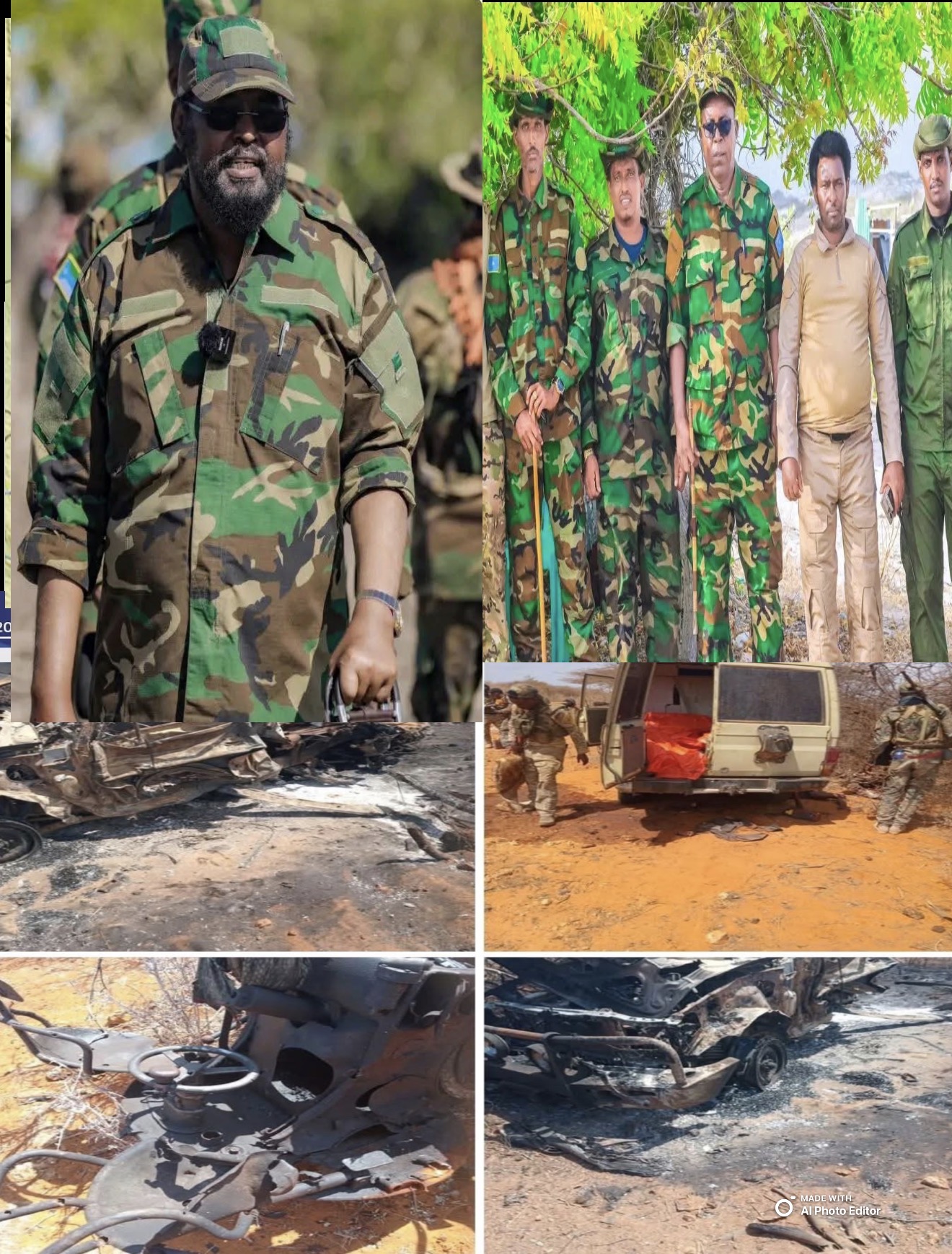
• More than 260 Al-Shabab fighters, including senior field commanders, were eliminated
• 12 terrorist vehicles, along with significant stocks of heavy weapons, were destroyed
• 13 militants were captured alive, providing valuable intelligence opportunities
• Jubaland Security Forces sustained minimal casualties, despite the length, intensity, and complexity of the battle
These outcomes represent far more than a tactical victory. They mark a strategic breakthrough in the war against Al-Shabab and reaffirm Jubaland’s position as the most resilient and capable frontline force confronting terrorism in Somalia.
This achievement is a testament to President Ahmed Madobe’s leadership defined by courage under pressure, clarity of purpose, and unwavering commitment to the security of his people and the stability of the region. The victory in Kuda is not only a triumph for Jubaland; it is a milestone for Somalia, the Horn of Africa, and all those who stand against extremism.
History will record that in Kuda, leadership made the difference and that leadership bore the name Ahmed Mohamed Islam (Ahmed Madobe).
A Call for International Recognition and Sustained Support:
This historic victory must not go unnoticed, understated, or treated as routine.
The decisive defeat of Al-Shabab in Kuda represents far more than a localized military success—it is a strategic achievement with national, regional, and international implications. As such, the international community has both a moral responsibility and a strategic interest in formally recognizing and actively supporting the Jubaland Government and its security forces.
Global counter-terrorism partners, including the United States, regional allies, and international security stakeholders, must acknowledge a clear reality: Jubaland has consistently demonstrated the capability, courage, and operational effectiveness required to confront and defeat Al-Shabab, even in environments where others have struggled or failed. The victory in Kuda is the result of disciplined command, battlefield experience, and sustained commitment to confronting extremism at its source.
Recognition, however, must extend beyond diplomatic statements and symbolic praise. Support must be practical, sustained, and results-oriented. To consolidate and expand these gains, international partners should provide comprehensive assistance that includes:
• Financial support to strengthen operational readiness and sustain long-term security operations
• Military equipment and logistics, particularly for counter-insurgency and rapid response capabilities
• Enhanced intelligence sharing, including surveillance, early-warning systems, and strategic analysis
• Capacity-building and training programs to further professionalize forces and institutionalize success
Al-Shabab remains one of the most dangerous and adaptive terrorist organizations in the Horn of Africa, with ambitions that extend beyond Somalia’s borders. Defeating such a threat requires empowering forces that have already proven their effectiveness on the battlefield. Jubaland’s security forces have shown not only resilience, but also the ability to translate support into measurable results.
Jubaland: The Frontline Against Terrorism.
Time and again, Jubaland has stood at the frontline of the fight against terrorism in southern Somalia. Its security forces have absorbed repeated attacks, adapted to evolving threats, and delivered decisive victories where it matters most, on the ground. The success in Kuda sends a powerful and unmistakable message: terrorism is not invincible, and with unity, capable leadership, and unwavering resolve, it can be defeated.
Standing with Jubaland is not an act of political favoritism it is a strategic investment in regional stability. Supporting Jubaland means safeguarding Somalia’s future, protecting neighboring states, securing maritime routes along the Indian Ocean, and strengthening international counter-terrorism efforts.
This victory is not Jubaland’s alone. It belongs to every community threatened by extremism, every nation invested in peace, and every partner committed to defeating terrorism. It is a victory for peace, stability, and hope in Somalia and across the Horn of Africa.
The path forward is clear: recognize success, reinforce proven partners, and stand firmly with Jubaland, where the fight against Al-Shabab is being won.
By:
Abdirezak Sahane Elmi
Writer and Geopolitical Analyst