“An Alleged Strategy to Transfer Regional Power to a Newly Established ONLF Political Function” from Prosperity Party.
Published by:
HornCurrent Media – Investigation Desk
Source Classification:
Anonymous Testimony (Code Name Used for Source Protection and Security)
Publication Status:
Ongoing Media Investigation – Part I
(Subsequent Parts to Be Published)
Executive Summary
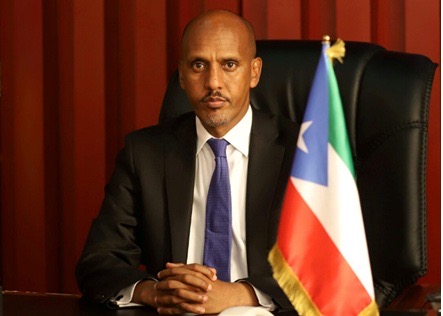
This confidential investigation report presents grave and time-sensitive concerns regarding the alleged political conduct, covert maneuvering, and long-term strategic intentions of Mustafe Muhumed Omar, President of the Somali Regional State of Ethiopia. Drawing upon corroborated testimonies from trusted insiders, longitudinal observation of political behavior, and analysis of documented administrative and security-related actions, this report formally alerts the leadership of the Prosperity Party (PP) to a potentially destabilizing political project unfolding within one of Ethiopia’s most strategically sensitive regions.
The findings suggest the existence of a deliberate and calculated plan aimed at restructuring regional political authority through the indirect empowerment of a reconstituted Ogaden National Liberation Front (ONLF) political apparatus. This alleged project appears to operate outside the ideological principles, organizational discipline, and constitutional framework of the Prosperity Party, while simultaneously exploiting its political cover.
If these alleged actions continue unchecked, they risk exposing both the Prosperity Party and the Federal Government of Ethiopia to significant political, security, and reputational vulnerabilities. These risks include, but are not limited to: internal party fragmentation, manipulation of electoral processes, institutional sabotage from within, erosion of federal authority, and the resurgence of instability in the Somali Region—a region critical to national security, border integrity, and regional geopolitics.
This report is issued as an urgent early-warning document, emphasizing prevention, strategic awareness, and decisive political oversight.
Background and Strategic Context:
According to multiple independent sources with direct proximity to regional decision-making structures, Mustafe Muhumed Omar is presently operating under a growing conviction that his tenure as President of the Somali Regional State is approaching its end. This perception is reportedly driven by cumulative political developments at the federal level, alongside a deepening fear of diminishing trust from Prime Minister Dr. Abiy Ahmed and senior federal security institutions.
Sources indicate that this apprehension is exacerbated by intelligence assessments allegedly linking Mustafe Muhumed Omar to historical and ongoing relationships with armed opposition elements that have previously engaged in insurgent activities against the Federal Democratic Republic of Ethiopia. These perceived associations have reportedly heightened federal scrutiny and intensified internal political pressure.
Compounding this anxiety is the psychological and political shadow cast by the fate of former Somali Region President Abdi Iley. Mustafe Muhumed Omar is alleged to view Abdi Iley’s abrupt political downfall and subsequent legal exposure as a cautionary precedent one he is determined to avoid at all costs. This fear is further magnified by unresolved and persistent allegations of serious human rights violations attributed to security operations conducted under his administration. These allegations include, but are not limited to, reports of mass civilian casualties and severe abuses in Dacawaley, Banbaas, Waydkaal, Raaso, and other localities. Although these accusations remain contested, their continued circulation within domestic and international human rights monitoring networks represents a looming legal and reputational threat.
Faced with the convergence of these political, legal, and security pressures, Mustafe Muhumed Omar is alleged to have adopted a strategy of controlled political disruption. Rather than pursuing institutional reform or reconciliation within the Prosperity Party framework, he is reportedly seeking to engineer an alternative political exit strategy one that preserves his influence, safeguards his personal security, and entrenches his ideological legacy. Central to this alleged strategy is the planned transfer of effective regional power to a political structure he can influence indirectly: a rebranded and politically normalized ONLF entity. This structure is reportedly intended to function as a successor authority, allowing Mustafe Muhumed Omar to retreat from formal office while maintaining decisive behind-the-scenes control over regional political, security, and economic dynamics.
Formation of a Parallel Political Project (ONLF Political Function)
Hand overing the regional Power Structure to his personal allies!
The investigation establishes with a high degree of confidence that Mustafe Muhumed Omar has, in recent months, overseen the consolidation of a parallel political project aligned with a reconstituted ONLF political function. This structure is not merely informal or symbolic in nature; rather, it appears to be a deliberately organized political mechanism designed to operate concurrently with, yet independently from, the institutional framework of the Prosperity Party.
According to multiple corroborated sources, this ONLF-aligned political function is intended to serve a dual and strategically calculated purpose:
• First, to act as a long-term political shield for Mustafe Muhumed Omar in the event of his departure—or removal—from the presidency of the Somali Regional State, thereby ensuring his continued relevance, protection, and leverage within regional politics.
• Second, to function as a strategic internal counterweight to the Prosperity Party, enabling the gradual erosion of party cohesion, loyalty, and authority from within the Somali Region through indirect influence rather than overt confrontation.
This project is reportedly framed by its architects as a “post-PP contingency platform,” capable of absorbing political elites, mobilizing clan and community networks, and repositioning former ONLF figures as legitimate successors to regional power under the guise of political normalization.
Key Actors and Coordinated Political Alignment:
The investigation further reveals that the formation of this parallel political structure has been accompanied by sustained consultations, strategic meetings, and coordinated planning sessions involving a core group of individuals whose political trajectories are closely intertwined with Mustafe Muhumed Omar’s personal survival and continued influence.
Identified participants in this alleged coordination include:
• Abdikarim Sheikh Muse – Chairman of the newly consolidated ONLF-aligned political function and a principal political confidant of Mustafe Omar.
• Bashir Makhtal – Executive Committee member and prominent community figure, reportedly tasked with external outreach and diaspora-related political messaging.
• Gurey – Head of the Social Affairs Bureau and former ONLF affiliate, serving as a bridge between current regional institutions and legacy ONLF networks.
• Ahmed Yasin – Head of the Disaster Prevention and Preparedness Commission (DPPC) in the Somali Region and a sitting member of the ONLF Executive Committee, allegedly playing a logistical and administrative facilitation role.
• Dahir Riyaale – ONLF Executive Committee member, reportedly involved in ideological coordination and internal strategy formulation.
· Mohamed sheik Aden, head of Somali Region education bureau, former ONLF
· Sugule deputy head of peace bureau, former ONLF
· Husein Kasim – Member of the Prosperity Party Central Committee, And others described by sources as maintaining close personal and political ties to Mustafe Muhumed Omar and allegedly operating as an internal liaison whose political standing is heavily dependent on Mustafe’s continued relevance.
Multiple independent sources emphasize that this network operates on a shared assumption: that their individual political futures are inseparable from Mustafe Muhumed Omar’s enduring influence, whether exercised formally within state structures or informally through alternative political vehicles outside the Prosperity Party framework.
This shared dependency is believed to have reinforced internal loyalty, discouraged defection, and accelerated the consolidation of the ONLF-aligned function as a fallback center of power.
Evidence of Political Withdrawal and Institutional Disengagement:
In parallel with the consolidation of this alternative political project, the investigation documents a series of verifiable behavioral and administrative indicators pointing to Mustafe Muhumed Omar’s progressive withdrawal from both state responsibilities and ruling-party obligations. These indicators collectively suggest a calculated disengagement rather than coincidental absence.
1. Absence from Major National and Federal Events:
Mustafe Muhumed Omar has been notably absent from several high-profile national events where the presence of regional presidents is considered both customary and politically obligatory, including:
• The Ethiopian Nations, Nationalities, and Peoples’ Festival, hosted in the Central Ethiopia Region.
• The Digital Ethiopia Conference, a flagship federal initiative attended by senior federal officials, regional presidents, and key policy stakeholders.
Sources interpret these absences as deliberate signals of political distancing rather than scheduling conflicts.
2. Non-Participation in Party Accountability and Performance Forums:
Further reinforcing this pattern, Mustafe Muhumed Omar reportedly failed to lead or meaningfully participate in the five-year performance review and accountability discussions assigned to Prosperity Party executive members nationwide. These forums are a core component of internal party discipline, evaluation, and renewal. His absence from these sessions is viewed by party insiders as a significant breach of organizational norms and an implicit rejection of collective accountability mechanisms.
3. Sustained Media Silence and Communication Withdrawal:
The investigation also confirms a prolonged and conspicuous withdrawal from public political communication:
• No public statements, commentary, or political messaging on X (formerly Twitter) or Facebook for a period exceeding two months.
• A complete cessation of sharing, endorsing, or amplifying communications issued by Prime Minister Dr. Abiy Ahmed, a departure from prior patterns of public alignment and support.
This silence is widely interpreted as an intentional effort to lower visibility, avoid scrutiny, and distance himself from federal political narratives.
4. Administrative Isolation and Office Absenteeism:
Finally, administrative records and close-source testimonies confirm that Mustafe Muhumed Omar has been largely absent from routine executive duties, reportedly disengaging from his office for approximately three consecutive weeks. During this period, decision-making authority was either delayed or informally delegated, contributing to institutional stagnation within the regional administration.
Analytical Assessment
According to multiple close sources, this pattern of withdrawal is directly linked to a convergence of factors, including:
• Political miscalculation regarding federal tolerance and party loyalty,
• Heightened fear of exposure related to past and present allegations,
• And an anticipation of imminent removal or forced political exit.
Taken together, the consolidation of a parallel ONLF-aligned political function and the simultaneous disengagement from Prosperity Party and state responsibilities suggest a deliberate strategic repositioning rather than passive retreat. This repositioning appears aimed at preserving influence beyond formal office while preparing the ground for a post-presidency power configuration in the Somali Region.
Confidential Electoral Strategy and Financial Engineering:
“Alleged Blueprint for Electoral Capture and Political Reconfiguration”
The investigation has uncovered what multiple corroborated sources describe as a highly confidential and strategically engineered electoral plan, allegedly reviewed and approved at the highest level by Mustafe Muhumed Omar, with the explicit objective of ensuring decisive electoral dominance for the ONLF-aligned political function in forthcoming regional elections.
This plan, according to insider testimonies and preliminary documentary indicators, is not limited to conventional political competition. Rather, it represents an integrated strategy combining electoral manipulation, financial redirection, administrative leverage, and institutional weakening of the Prosperity Party’s regional presence.
Sources emphasize that this strategy is viewed internally as a “one-cycle decisive operation”—intended to irreversibly alter the balance of political power within the Somali Regional State.
Core Strategic Objectives:
At the center of this alleged plan are two interdependent political objectives:
• Securing a minimum of 70 percent of seats in the Somali Regional Council for ONLF-aligned candidates, thereby guaranteeing legislative dominance and long-term control over regional governance.
• Systematically weakening, marginalizing, or eliminating Prosperity Party candidates through a combination of administrative pressure, selective exclusion, and resource deprivation.
According to sources familiar with internal discussions, the intention is not merely to win elections but to render the Prosperity Party structurally incapable of recovering political relevance in the region for multiple electoral cycles.
Financial Architecture and Resource Mobilization:
The investigation further identifies a sophisticated system of financial engineering allegedly designed to underwrite this electoral project while maintaining a veneer of legality and administrative normalcy.
Key elements of this financial architecture reportedly include:
• Election financing sourced primarily from government-backed investment and development projects, rather than from transparent party fundraising mechanisms.
• Nine major regional capital projects allegedly allocated to private contractors with direct or indirect links to the ONLF-aligned political function. In very mistaken procurement terms and procedures.
• Sixteen additional projects reportedly awarded to companies and individuals connected to the same political network, as confirmed by sources within the Regional Projects Administration Committee.
These projects, officially justified as development initiatives, are alleged to function as covert financing channels. Funds generated through inflated contracts, advance payments, and discretionary budget reallocations are reportedly redirected to support:
• Campaign operations and candidate logistics,
• Voter mobilization and influence mechanisms,
• Media and narrative management,
• And localized patronage systems designed to secure electoral loyalty.
Sources describe this arrangement as a “self-financing political ecosystem,” allowing the ONLF-aligned function to operate independently of formal party financing structures while exploiting state resources.
Political Calculations Behind the Alleged Power Transfer:
The investigation identifies four critical political calculations that reportedly underpin Mustafe Muhumed Omar’s decision to distance himself from the Prosperity Party and facilitate the empowerment of an external political entity.
1. Ideological and Organizational Incompatibility:
Multiple sources assert that Mustafe Muhumed Omar has never been ideologically aligned with the Prosperity Party, either philosophically or politically. His governance style, decision-making patterns, and alliance-building behavior are described as consistently divergent from party doctrine, discipline, and collective accountability. This ideological disconnect has allegedly manifested in repeated unilateral actions, resistance to party oversight, and selective adherence to federal directives, contributing to growing mistrust within the party’s central leadership.
2. Fear of Legal, Political, and Security Exposure:
The investigation further indicates that Mustafe Muhumed Omar is operating under acute fear of legal and political exposure. He is alleged to have engaged in actions that may constitute serious breaches of national trust, including:
• Collaboration with federal-level opposition networks operating outside constitutional channels,
• The unauthorized sharing of sensitive national or regional information,
• And the indirect financing of anti-government actors through intermediaries and informal networks.
According to security-linked sources, increased intelligence scrutiny and internal reporting have significantly heightened his perception of imminent criminal accountability, including potential charges related to national security and political betrayal.
3. Exit Strategy and Preemptive Risk Mitigation:
Contrary to conventional political ambition, Mustafe Muhumed Omar is reportedly not seeking an additional presidential term. Instead, he is allegedly focused on securing a controlled exit from formal office while minimizing personal risk. Sources suggest that he fears retaliation from political rivals and institutional actors, mirroring the punitive measures he himself allegedly employed against predecessors and opponents. The empowerment of an alternative political structure is therefore viewed as a defensive mechanism, designed to deter retribution and preserve leverage after leaving office.
4. Legacy Construction and Rebranding as a “Freedom Figure”
Finally, the investigation highlights a deliberate effort by Mustafe Muhumed Omar to reconstruct his political legacy, both domestically and internationally. Central to this effort is the portrayal of himself as a historical enabler of ONLF’s political resurgence.
Sources indicate that this narrative is being actively promoted among regional and international audiences, particularly within political circles in Kenya and Somalia—where he seeks recognition as a leader who transformed an armed movement into a legitimate political force.
This rebranding effort frames the alleged power transfer not as political subversion, but as a symbolic victory for self-determination, reconciliation, and regional empowerment.
Broader National Implications and Strategic Risk Assessment
Alleged Alignment with a Coordinated National Destabilization Effort:
The investigation further identifies indicators suggesting that the actions attributed to Mustafe Muhumed Omar may not be confined to regional political maneuvering alone, but rather form part of a broader, coordinated national opposition strategy aimed at systematically weakening the Prosperity Party (PP) across multiple levels of governance.
According to intelligence-informed sources and comparative pattern analysis, Mustafe Muhumed Omar is allegedly aligned directly or indirectly—with a constellation of political actors and networks pursuing a calculated campaign to erode the ruling party’s credibility, internal cohesion, and electoral legitimacy under the guise of democratic competition.
This broader strategy reportedly operates through a combination of narrative construction, selective non-intervention, and outcome management, while maintaining plausible deniability at both domestic and international levels.
Key Elements of the Alleged National Strategy
Evidence reviewed by the investigation suggests that the strategy attributed to this alignment includes, but is not limited to, the following components:
• Manufacturing narratives of electoral defeat
Deliberate preparation of post-election messaging designed to portray Prosperity Party losses as organic expressions of popular will, irrespective of behind-the-scenes manipulation, resource diversion, or administrative interference.
• Strategic allowance of PP candidate losses at the federal and regional levels
Sources indicate that, in select constituencies, party candidates may be intentionally deprived of institutional support, security backing, or logistical coordination—thereby engineering defeat while preserving the appearance of fair competition.
• Instrumentalization of democratic discourse
The public invocation of democratic principles, electoral transparency, and respect for voter choice is allegedly used as a protective narrative framework, shielding orchestrated outcomes from scrutiny while appealing to international observers and external partners.
This approach enables political actors involved in the strategy to simultaneously claim moral high ground and political victimhood, while exerting decisive influence over electoral trajectories behind closed doors.
Anticipated Post-Exit Narrative and International Positioning:
The investigation further assesses that this broader strategy is designed to facilitate a controlled political exit for Mustafe Muhumed Omar, potentially including physical departure from the country, without immediate political or legal repercussions.
According to sources familiar with contingency planning discussions, the anticipated public narrative following such an exit would emphasize democratic legitimacy and political inevitability. In this scenario, Mustafe Muhumed Omar would reportedly position himself as a neutral observer of democratic outcomes, asserting that:
“The Prosperity Party lost because the people chose otherwise, and democratic principles must be respected.”
This statement, or variations thereof, is assessed to be strategically crafted to achieve several objectives simultaneously:
• To absolve himself of responsibility for political destabilization,
• To delegitimize any subsequent efforts by the federal government to contest or investigate electoral irregularities,
• And to secure sympathy, protection, or political relevance among international actors, media outlets, and advocacy networks.
National-Level Risk Implications
If substantiated, this alleged alignment poses significant risks extending beyond the Somali Regional State, including:
• The normalization of engineered electoral outcomes masked as democratic choice,
• Precedent-setting erosion of ruling-party authority through internal sabotage rather than open opposition,
• And the amplification of political fragmentation at a time of heightened national security and economic vulnerability.
The cumulative effect of these dynamics could undermine public trust in electoral institutions, weaken federal cohesion, and embolden similar strategies in other regions.
Strong Editorial and Investigative Notice:
Advance Warning to Stakeholders and Relevant Authorities:
As part of its continuing mandate, HornCurrent News Desk – Investigations Unit formally notifies readers, stakeholders, and responsible institutions that the second phase of this investigation is currently underway and will be published imminently.
This forthcoming report will move beyond analytical assessment and into documented attribution and evidentiary disclosure. It will include, but will not be limited to:
• Identities of confidential and semi-confidential sources, disclosed where security and legal thresholds permit,
• Detailed listings of government-funded projects allegedly planned or redirected to finance opposition political structures and their affiliated bureaus,
• Names of local contractors and corporate entities implicated in the execution and financial circulation of these projects,
• And a comprehensive profile of the leading coordination team, including political operatives, administrative facilitators, and intermediaries involved in the alleged scheme.
This next publication will be evidence-driven, methodically sourced, and presented in accordance with professional investigative standards.