The Supreme Council for Islamic Affairs of Ethiopia, exercising the authority granted to it by the Council’s Establishment Proclamation No. 1207/2012 and by the Federal Constitution of 2015, confirms that any decisions or actions taken by state bodies that infringe upon or restrict the religious rights of the Muslim public must be corrected. The Council has full responsibility to demand and ensure remedies and adjustments where such infringements occur.
On this basis, our country — whose majority faith has historically been a model of respect and coexistence — is recognized for that special legacy of harmony. The Government, too, by protecting this value and responding over time to the longstanding questions and concerns of the Muslim public, has shown commitment in this regard; we acknowledge and believe this.
Nevertheless, there remain outstanding questions that we expect — God willing — will be addressed going forward. In addition, we note that government bodies are now engaging with Muslim leadership institutions more than before and undertaking cooperative and corrective work. We extend our sincere appreciation to His Excellency Prime Minister Dr. Abiy Ahmed and to the Government for these customary efforts.
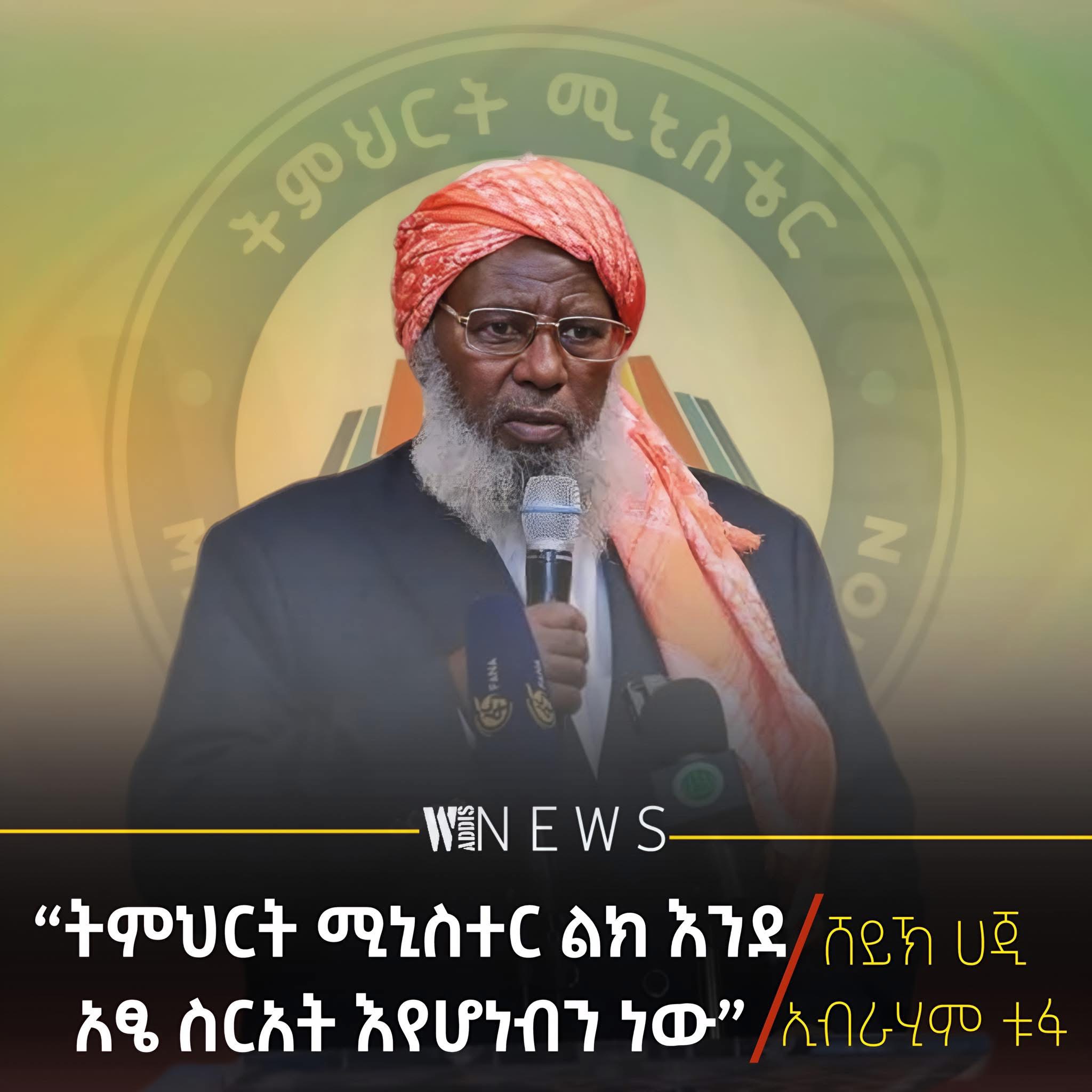
However, decisions, measures, and stances taken at various times by the Ministry of Education have severely infringed on the rights of Muslim citizens. Although these actions may be improved over time and resolved through dialogue with leadership institutions, some of the measures already taken by the Ministry — and the positions that have been articulated — gravely violate the rights of the Muslim public and have, in some cases, a distinct character that departs from the Federal Government’s stance. These include, but are not limited to, the following:
- On the right of Muslim female students to attend school wearing religious dress (hijab):
Considering the Federal Constitution and national law, there is no law in this country that prohibits Muslim female students from attending school wearing the religious dress that their faith requires. Even where laws exist, Article 27 of the Constitution — which protects freedom of religion, faith, and conscience — and Article 9(1) of the Constitution mean that any administrative decision by a government body or authority that conflicts with constitutional protections would have no legal effect. Thus, an individual administrative order purporting to prevent Muslim female students from wearing their religious dress to study is not legally enforceable.
That said, because the Constitution is clear on this matter, it is concerning when the Ministry of Education, as an institution, or when the Minister on certain occasions, issues statements or explanations that mischaracterize the hijab issue and suggest that Muslim female students cannot attend class wearing the dress required by their faith. Such rhetoric is unacceptable to the Muslim public and to Muslim leadership institutions and causes anxiety. The Ministry should focus on substantive educational quality issues where it can bring improvement; making the hijab a recurring agenda item and framing it in the way that has been done will not produce desired outcomes and is unnecessary.
Muslim female students have the same rights as others, and reasonable safety and security measures within educational institutions can be applied without depriving them of their religious dress. Attempts to prevent students from wearing the religious dress under the pretext of safety or other considerations, in ways that are legally unfounded or lacking acceptance, are not legitimate and will not be recognized.
While the Ministry and some actors may claim there are legal avenues (invoking, for example, Article 11 and Article 90(2) of the Constitution) to support certain approaches, when those steps are taken outside of established procedures and without the participation of recognized guardians of the Constitution and relevant leadership assemblies, they lack legitimacy.
Accordingly, the Council expresses its concern that the actions and positions the Ministry has taken regarding Muslim female students’ dress have been adopted without substantive consultation with Muslim leadership institutions and without proper engagement. We call for a thorough, transparent review and correction of false or misleading information circulated about the Ministry’s interactions with legislative leaders, and we request that clear clarifications and corrections be issued.
- Regarding the Amhara Region decision to teach Ge‘ez script in host-class settings for Muslim students:
The Amhara Regional Education Bureau issued a decision to require Muslim students, in host-class or boarding contexts, to learn the Ge‘ez script. That decision was made without meaningful consultation with parents, the Muslim community, or local Muslim leadership assemblies. As a result, the decision has been broadly opposed by the Muslim public in the region and by various regional assemblies.
The Supreme Council for Islamic Affairs finds that, in the absence of legal basis allowing the forced teaching of Ge‘ez in host-class settings without consultation, the measure risks aggravating local tensions and producing dangerous outcomes. Therefore, we call on the Regional Bureau to withdraw or reexamine that decision, to bring it into line with national education policy, and to consult with affected communities. We also request that the Bureau reconsider and reverse its decision and take corrective action after proper dialogue.
We note that the Regional Bureau’s decision conflicts with the national education policy and with Articles 28 and 29 of the General Education Proclamation No. 1368/2016. Because the Ministry of Education has the authority and direct responsibility to halt measures that conflict with national law, we urge the Ministry to intervene decisively and ensure the legal responsibilities and protections at the federal level are upheld.
- Regarding Muslim female students in Tigray and the issue of religious dress:
In the Tigray Region, female Muslim students who were prevented from attending school over the hijab issue in recent years have, in many cases, been pushed out of the education system for up to two years. The Council notes that the Ministry of Education, as the body directly responsible, has not made sufficient effort to reintegrate those students and bring them back into schooling.
Although regional courts and assemblies have at times issued decisions recognizing the students’ rights to wear the hijab and to return to study, implementation by regional authorities has been delayed or blocked, and students have not yet resumed their studies. Therefore, we call on regional governments to implement court decisions and to ensure that Muslim students who have the right to wear their religious dress are permitted to continue their education. We further call on the Ministry of Education to assume direct responsibility, to take decisive action, to enforce applicable judicial rulings, and to fulfill its legal obligations so that students may return to school.
General appeal and concluding remarks:
Overall, the matters raised above regarding Muslim students are serious. We urge the Ministry of Education, as the primary government body responsible for education, to resolve these problems from within its remit and to remove the obstacles that hinder students’ education. We also call on the Ministry of Women and Social Affairs to engage directly where the issue pertains to women’s and social affairs, and to ensure that legal responsibilities are discharged.
Other governmental and non-governmental organizations that have stakes in this matter should also take note and pay special attention, so as to avoid actions that might undermine peace and social cohesion.
Finally, the Supreme Council for Islamic Affairs affirms that it is closely following developments, and that it stands ready — together with relevant stakeholders including religious leaders, legal experts, civil society, women’s and youth representatives, and media professionals — to participate in consultations and actions to address these challenges and to help bring sustainable solutions.
— End of statement.
Source: Walo Tv