Addis Ababa,November 16,2025
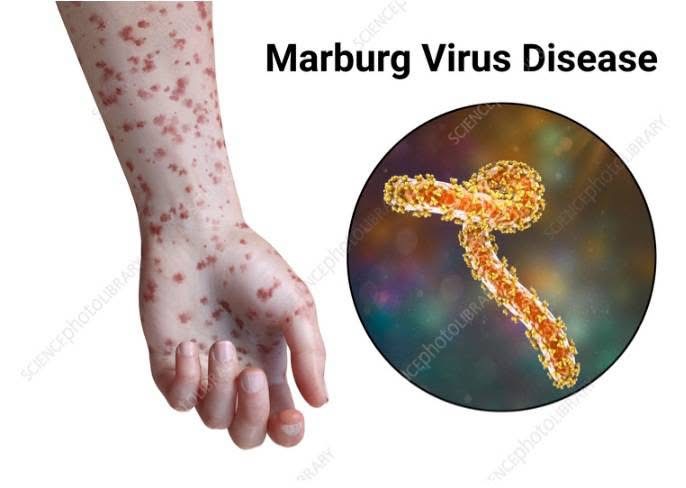
HornCurrent has obtained new public-health information detailing how the deadly Marburg Virus spreads and how its symptoms progress in stages. The Marburg virus is one of the world’s most dangerous pathogens, belonging to the same Filoviridae family as the Ebola virus. As a result, both diseases share similar symptoms and extremely high fatality rates.
Origin and Early Outbreaks
The Marburg virus was first identified in 1967 after simultaneous outbreaks in Marburg and Frankfurt in Germany, as well as Belgrade, Serbia. The virus is believed to have entered these laboratories through research monkeys imported from Uganda.
Natural Host
Scientists confirm that the natural carriers of the virus are fruit-eating bats, specifically Rousettus bats, which typically live in caves and mining areas. Humans often become infected after entering these bat-inhabited environments.
How the Virus Spreads
Marburg virus spreads primarily through direct contact with bodily fluids of infected persons or animals. These fluids include:
- Blood
- Saliva
- Vomit
- Stool
- Urine
- Semen
- Other contaminated fluids
Transmission occurs through broken skin or mucous membranes.
Incubation Period
Symptoms typically appear 2–21 days after exposure.
Stages of Symptoms
1. Early Stage
During the first phase, patients experience:
- High fever
- Severe headache
- Intense muscle and joint pain
- Extreme fatigue
2. Gastrointestinal Stage (after a few days)
Symptoms worsen into:
- Severe diarrhea
- Stomach cramps
- Nausea
- Vomiting
- Chest and throat pain
3. Severe Stage (after 5–7 days)
In critical cases, the disease causes:
- Heavy bleeding (from the nose, gums, eyes, and under the skin)
- Liver and kidney failure
- Confusion and loss of consciousness
- Multi-organ failure
- Death
Additional symptoms may include skin rash and eye irritation.
Treatment and Prevention
There is no approved cure or vaccine for Marburg virus at this time. Treatment is supportive and focuses on:
- Replacing lost fluids through IV
- Stabilizing blood pressure
- Managing bleeding and preventing clotting disorders
Healthcare professionals must use protective gear such as gloves, gowns, masks, and eye shields when treating patients.
Public Health Advice
- Wash hands regularly with soap.
- Avoid contact with sick individuals’ bodily fluids.
- Avoid caves or mining areas where Rousettus bats live.
HornCurrent will continue monitoring updates from health authorities regarding Marburg virus outbreaks and response measures.