By Megersa Tola.
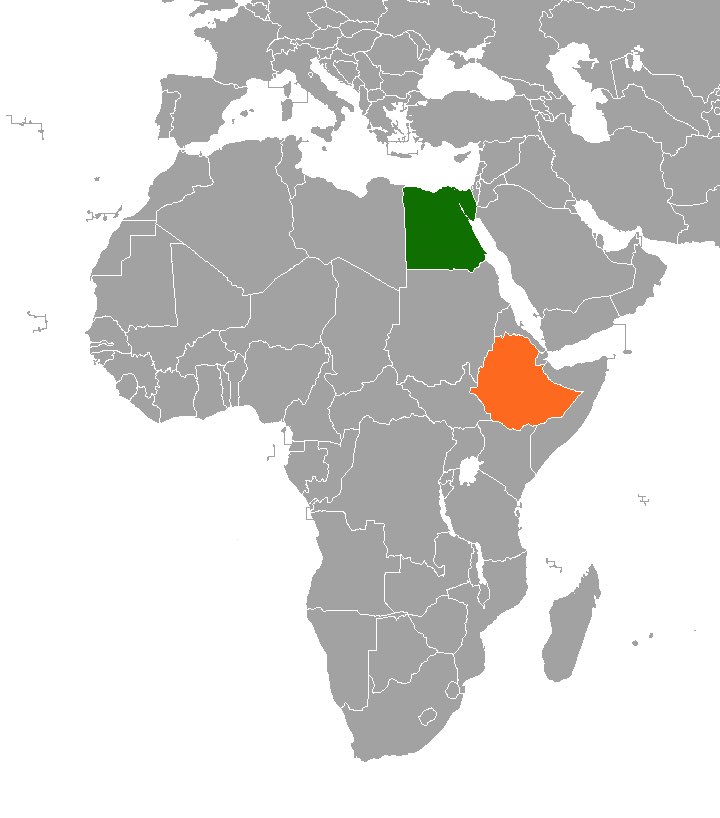
For more than a century, Egypt’s ruling elite has treated the Nile River not as a shared natural resource, but as a tool of hegemony—weaponized through diplomacy, manipulation, and proxy destabilization. Today, this long-standing posture has entered a dangerous new phase. Cairo’s geopolitical anxieties over Ethiopia’s rapid development and the Grand Ethiopian Renaissance Dam (GERD) are now manifesting in renewed efforts to interfere in Ethiopia’s internal affairs, using regional alliances and insurgent groups to weaken the Ethiopian state from within.
While Ethiopia has historically demonstrated remarkable resilience against external aggression, the evolving regional landscape demands sober analysis, national unity, and strategic action. What we face is not simply foreign pressure—it is a coordinated attempt to undermine Ethiopia’s sovereignty, territorial integrity, and regional leadership.
A Shifting Strategy: Egypt’s Attempts to Exploit Ethiopia’s Internal Fault Lines.
In recent years, Cairo has recalibrated its approach to Ethiopia, investing in relationships with actors and environments that it perceives as leverage points. Although direct evidence is often obscured by geopolitical secrecy, the pattern of Egypt’s engagement in the Horn of Africa raises serious concern:
1. Leveraging Eritrea as a Strategic Pressure Point.
Eritrea’s geographic location makes it an ideal launching ground for regional destabilization. Egypt’s growing diplomatic and military engagement with Asmara has raised alarms among analysts who view this relationship as an avenue for pressuring Ethiopia’s northern and northeastern corridors.
Such proximity-based influence offers Egypt a forward base to shape regional instability in ways that align with its Nile-centered objectives.
2. Attempting to Engage Insurgent or Fragmented Groups.
Political instability creates openings for external meddling.
Reports of Egyptian interest—whether political, rhetorical, or covert—in fractured Ethiopian insurgent groups such as remnants of Fano or disaffected factions within TPLF reflect a calculated strategy:
destabilize Ethiopia from within to weaken its negotiating power and derail its national projects.
These groups, each driven by distinct grievances, become tempting instruments for foreign actors seeking to amplify conflict, incite fragmentation, and erode public trust in the Ethiopian state.
3. Undermining Ethiopia’s Regional Influence.
Egypt understands that a stable, united, and economically ascending Ethiopia shifts the balance of power in the region.
Thus, any political shock—ethnic tension, insurgency, border conflict, or economic disruption—serves the broader aim of slowing Ethiopia’s rise and reinforcing the decades-old narrative that Egypt alone must dominate Nile politics.
Why This Threat Matters: The Sovereignty Question
Ethiopia’s sovereignty is not merely its borders; it is the authority of the Ethiopian state to make decisions in the interest of its people without foreign interference. Egypt’s pattern of external maneuvering risks:
- Fueling internal divisions,
- Manipulating regional fault lines,
- Triggering security crises, and
- Obstructing Ethiopia’s development trajectory, including the GERD.
A weakened Ethiopia is a strategic victory for Egypt.
A divided Ethiopia is a dream scenario for those who oppose its rise.
And an Ethiopia exhausted by internal conflict is one whose resources and diplomacy are diverted from defending its national interests.
This is the danger we must confront with clarity—not panic, but preparedness.
Collective Action: The Only Shield Against External Manipulation.
Egypt’s renewed activities underscore a truth we can no longer ignore: Ethiopia’s internal fragmentation is the single greatest gift to external adversaries.
No foreign power can destabilize a united nation.
But any foreign power can exploit a divided one.
1. National Unity Must Become a Strategic Priority.
Political forces, intellectuals, regional actors, civil society, and faith leaders must reinforce a new culture of unity based on sovereignty, constitutional order, and national survival.
Disagreement is natural; disintegration is not.
2. Strengthening State Institutions
Only strong, inclusive, and accountable national institutions can withstand foreign manipulation.
The defense sector, intelligence services, diplomatic corps, and regional administrations must coordinate more effectively than ever.
3. Pan-Ethiopian Cooperation Across Ethnic Lines.
Egypt benefits from Ethiopian fragmentation.
Ethiopians benefit from Ethiopian cohesion.
The nation’s political spectrum must recognize this basic geopolitical truth and reject any alliance—internal or external—that compromises national integrity.
4. Regional Solidarity in the Horn of Africa.
Somalia, Djibouti, Kenya, and South Sudan all have an interest in a stable Ethiopia.
Collective regional security mechanisms can help prevent external powers from turning local disputes into wider conflicts.
Conclusion: A Moment of Decision.
Egypt’s renewed maneuvers represent more than geopolitical mischief—they are a direct challenge to the sovereignty and future stability of Ethiopia. But this moment also presents an opportunity:
an opportunity for Ethiopians to rise above their differences and defend the nation’s long-term interests with clarity and unity.
Ethiopia has never yielded to external domination.
It will not begin now—so long as Ethiopians refuse to become instruments in someone else’s agenda.
The path forward is difficult, but it is navigable.
And in this defining moment, collective action is not just a strategy—it is Ethiopia’s shield, its strength, and its future.
By. Megersa Tola
Ethiopian Political Analyst